


Author of Science Fiction and Anticipation Novels
Author of Science Fiction and Anticipation Novels
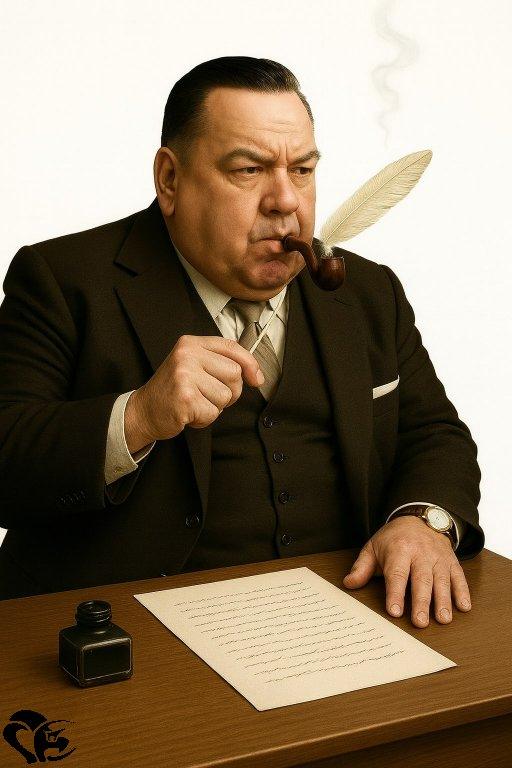
My writing process is based on a three-step approach. In this post, I'll introduce you to the first step.
It is the raw writing, where the creativity of the project. I visualize the scene and the characters' dialogues. I adopt the posture of a spectator and, as a "scribe," I transpose into text the unfolding of what is playing out in my mind. In other words, it's an instinctive approach: I just have to concentrate on the current subject and I write. Beforehand, I always reread the previously written paragraph, then I let my imagination unfold in the background. It's a stroll through the story and the events, in the continuity of the narrative.
So far, I've never experienced writer's block. My imagination never fails me. This may seem paradoxical, because immersion in the story is not easy. It's not like going to the movies and letting yourself be carried away by a film: there is an intense personal involvement. Even if I maintain a spectator position, I am an integral part of the story. Imagine watching a western where two men face off for a duel: you feel the heavy heat of a dusty street, the silence that precedes the fatal moment when the adversaries draw their revolvers simultaneously. Being in the scene, and not just watching as in the film "Gunfight at the OK Corral," is a singular experience.
This process also joins a recurring theme of the science fiction that we find in several films and series, such as "Westworld" or "Total Recall." I have this ability to both participate and describe my stories. But the exercise is demanding: depending on the nature of the scenes experienced and transcribed, we leave energy there, like after an intense dream or a nightmare. Some sequences can be exhausting.
I am aware that I am not inventing anything in this creative process. I remember, for example, that Moebius, master of science fiction comics, had designed his album "Le Garage humide" in a comparable way. This work, born in 1976 in the magazine Metal Screaming, was published as a serial in very short episodes (2 to 4 pages), without a pre-established scenario. Moebius had set himself a challenge: to improvise each episode as inspiration came, without an overall plan or prior idea, sometimes even without knowing how the story would continue.
This is exactly how I write. I didn't consciously choose this method, but I found that I was making it my own. recipe singular. As I progress through a chapter, I often have no idea how the story will evolve. Of course, the overall coherence of the project remains essential, and I must regularly reintroduce or adapt new elements to ensure the unity of the narrative.
For example, the first novel I am about to publish has been finalized at this stage of writing and is about 400 pages long to date. However, the central theme of the novel was not that of the initial story, which, moreover, had a rather distant connection with the science fictionThe idea came to me as a simple paragraph, which grew into a chapter and then, as it developed, distanced itself from the original project. New chapters were added to it until it formed a narrative arc linked to the general context but autonomous enough to live independently.
Having reached nearly 1,000 pages into the overall project, I had to make a decision: I couldn't continue indefinitely without taking the next steps necessary to produce a reasonably sized novel. I had to be able to tell myself that I had completed at least part of the story. This block of chapters thus became a self-contained narrative arc. Self-contained in terms of plot, it can now move on to the next phases of my writing process. I have also planned to split it into two volumes, which I intend to publish.
I will introduce you to the next two stages of my writing process in my next articles.