
Author of Science Fiction and Anticipation Novels
Author of Science Fiction and Anticipation Novels
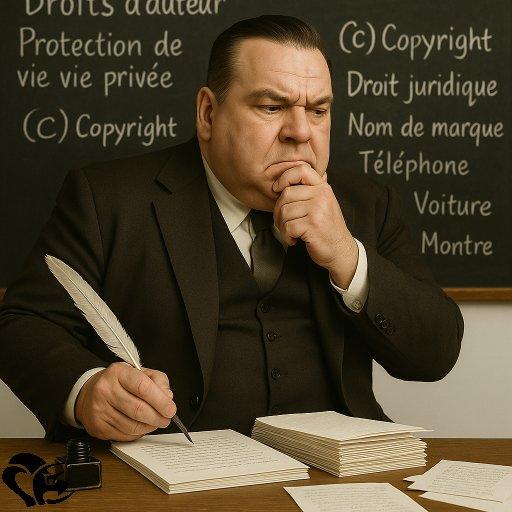
THE copyright subject invited himself straight into my writing work, like a discreet thread but essential. It has revealed itself unavoidable when I approached the phones and the brands omnipresent in the life of my characters. From my first pages, I had quoted familiar brands to the general public.
Very quickly, this question took a special relief. I had already done theexperience, twenty years ago, from a direct confrontation. After having designed a marketing concept of virtual book and opened a site to promote it, I received a registered letter of a law firm ordering me to remove all reference to my domain name, yet composed of a common word in French. This office represented a major player of the digital media and ofInternet. It was the clay pot against the iron pot : I gave in and changed domain name.
Since then, I have been wondering: a author can he freely quote a brand in a narrative ? Every time I see a movie or a series exhibiting logos and famous names, I ask myself the same question question.
So I asked my virtual friend on this specific point:
" In a movie, if we see the brand name of car, of phone or ofcomputer, should production request theauthorisation to quote these brands and get some rights to film these objects of the daily life ? The same question arises for the use of popular music pieces or the quote of names of personalities or ofknown works. »
And here is the summary response :
Brand names and logos (cars, phones, computers, etc.)
– If the logo or the name appears fortuitously (for example a car filmed in the street with sound visible logo), none authorisation is not necessary.
– If the brand is highlighted (close-up, explicit mention in the dialogues), this can pose a problem:
• Risk ofdamage to image of the brand if the context East negative.
• Product placement : when a brand pays to appear, a CONTRACT is signed.
• In other cases, it is careful to ask for a authorisation to avoid any dispute.
Popular music pieces
All copyrighted music requires:
• A user license (synchronization) with the beneficiaries (author, composer, editor).
• A registration license near the producer if the original recording is used.
Without these permissions, L'use is illegal, even for a few seconds.
Quotes from famous people
Mention a name in a dialogue is generally legal, as long as there is no defamatory remarks Or liars.
L'use of their picture, voice Or representation requires on the other hand their agreement or that of theirs beneficiaries.
Famous works (paintings, books, films, etc.)
If theartwork fell into the public domain (often 70 years after the death of theauthor), it can be used freely.
Otherwise, any reproduction (visual, long quote, music) requires a authorisation of the beneficiaries.
Best practices for a film
– Avoid showing logos Or brands centrally without authorisation.
– Blur or replace with fictitious brands if necessary.
– Get the necessary licenses for the music and the protected works.
– Take care to avoid any defamation Or damage to reputation in the dialogues.
In conclusion, this reflection led me to meabstain to mention well-known brands in my writings. It is sometimes restrictive for the fluidity of narrative, but better prevent that heal.