


Author of Science Fiction and Anticipation Novels
Author of Science Fiction and Anticipation Novels
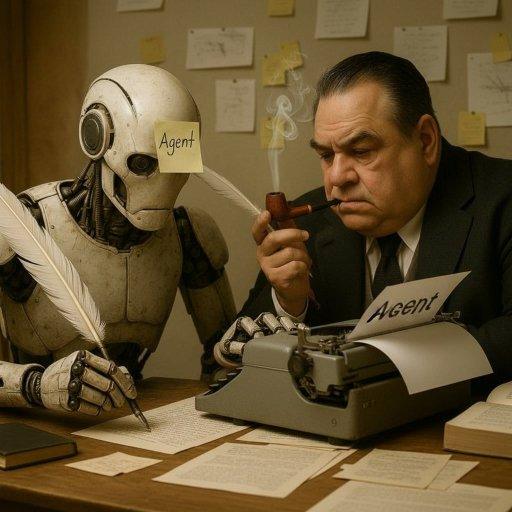
Implementing an AI agent dedicated to writing and self-publishing isn't about "adding a gadget." On the contrary, it's about setting up a streamlined production chain that transforms a creative project into a sustainable system. When you're writing a novel, managing its publication, producing images, and running a website, the main enemy isn't a lack of ideas: it's distraction. An AI agent serves precisely to reduce this friction, by automating what needs to be automated and safeguarding what shouldn't be forgotten.
For writers, the benefit of an agent is twofold. First, it acts as an active memory: it instantly retrieves a stylistic rule, a consistent world-building element, a canonical detail, or a decision made six months ago. Second, it automates repetitive steps: preparing an outline, summarizing a chapter, detecting inconsistencies, suggesting alternative wording, and controlling pacing and redundancy. The writer remains in control; the agent becomes the workshop, capable of applying revision protocols and producing polished deliverables (summaries, checklists, editorial notes) without straining the creative part of the brain.
In self-publishing, the agent becomes a “production manager.” They can generate consistent back cover copy, adapt Amazon descriptions to various lengths, prepare press releases, structure a publication schedule, and track a version dashboard (manuscript, revisions, layout, final files). The value here isn't in doing things “faster,” but in doing them “more reliably”: fewer oversights, fewer inconsistencies, less last-minute tinkering. With safeguards in place (human validation of sensitive decisions), the agent becomes a process co-pilot.
For image generation, an AI agent acts as a visual consistency accelerator. Instead of starting from scratch with each prompt, it maintains a consistent aesthetic: character characteristics, color codes, style, restrictions, formats, and descriptive vocabulary. It can also produce controlled variations (three angles, three moods, three framings) while respecting technical constraints (resolution, framing, absence of text, readability). The result: a stable graphic identity, which is crucial for a series, a serial, or an author's brand.
Finally, for the website, the agent becomes a first-level editorial and technical manager. They can propose a draft article based on a template, generate SEO metadata, produce useful alt text, verify category consistency, suggest internal links, and maintain a routine (publishing, updating, analysis). Without replacing SEO tools, they act as the link between content, structure, and regularity.
Ultimately, an AI agent doesn't write "instead" of the author. It generates consistency, organization, and greater confidence. It transforms a solitary effort into a controlled pipeline, where creativity remains human, and execution becomes seamless. This is often where the difference lies between a project that moves forward... and a project that ultimately comes to fruition.